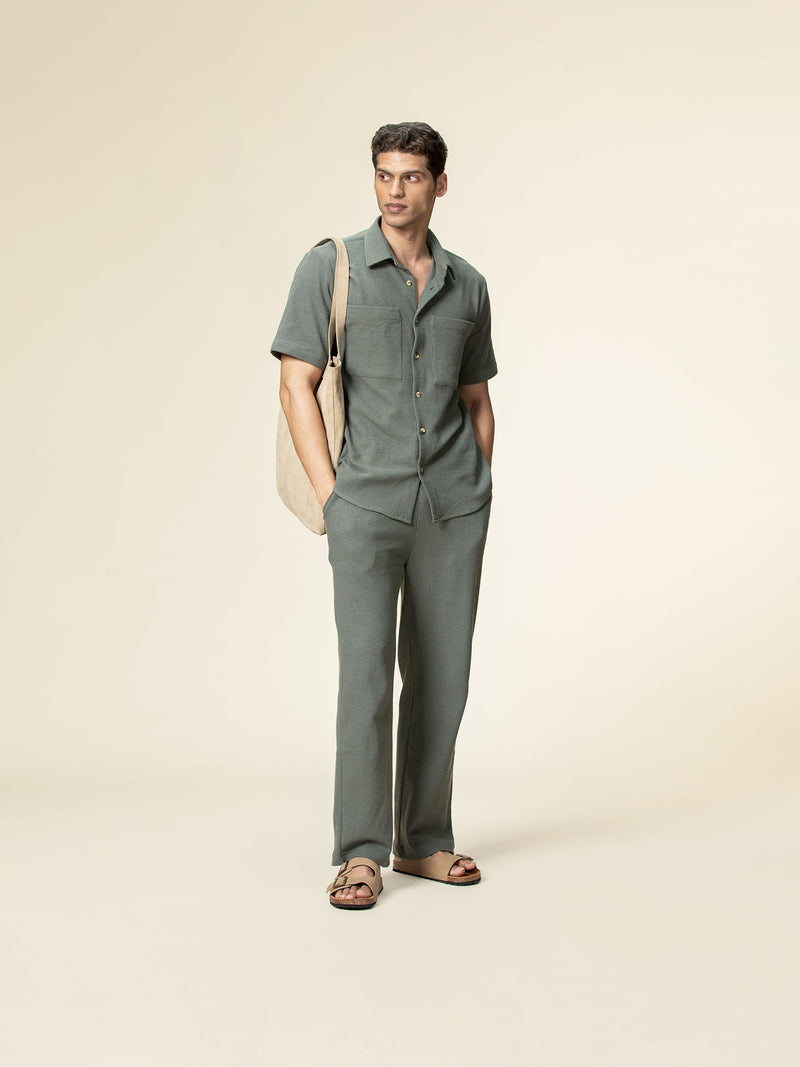
A pair of trousers should not be a thing you think about. It should sit, move, breathe, and hold its shape from the morning meeting to the late dinner without asking for your attention. Most don't. That's the problem performance trousers solve.
"High performance" in the trouser context is not a marketing word for us — it describes a specific set of engineering choices we make about fabric, cut, and construction. This piece explains what those choices are and when they're worth paying for.
What "high performance" actually means in a trouser.
Four things, applied together:
1. Fabric that moves with you
A regular wool or cotton trouser stretches a small amount in the warp and weft. A high-performance trouser uses a 2-way or 4-way stretch weave — usually a synthetic or synthetic blend engineered to recover after stretch. You can sit cross-legged on the floor in one and it returns to shape when you stand.
The trade-off most brands make is between stretch and structure. Too much stretch and the trouser starts to feel like a jogger. Too little and there's no real benefit over a normal pair. The right weave gives you both.
2. Breathability
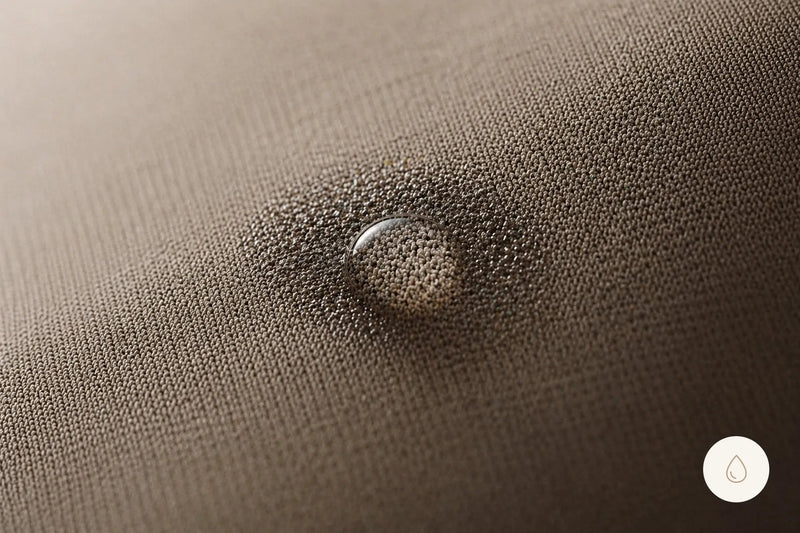
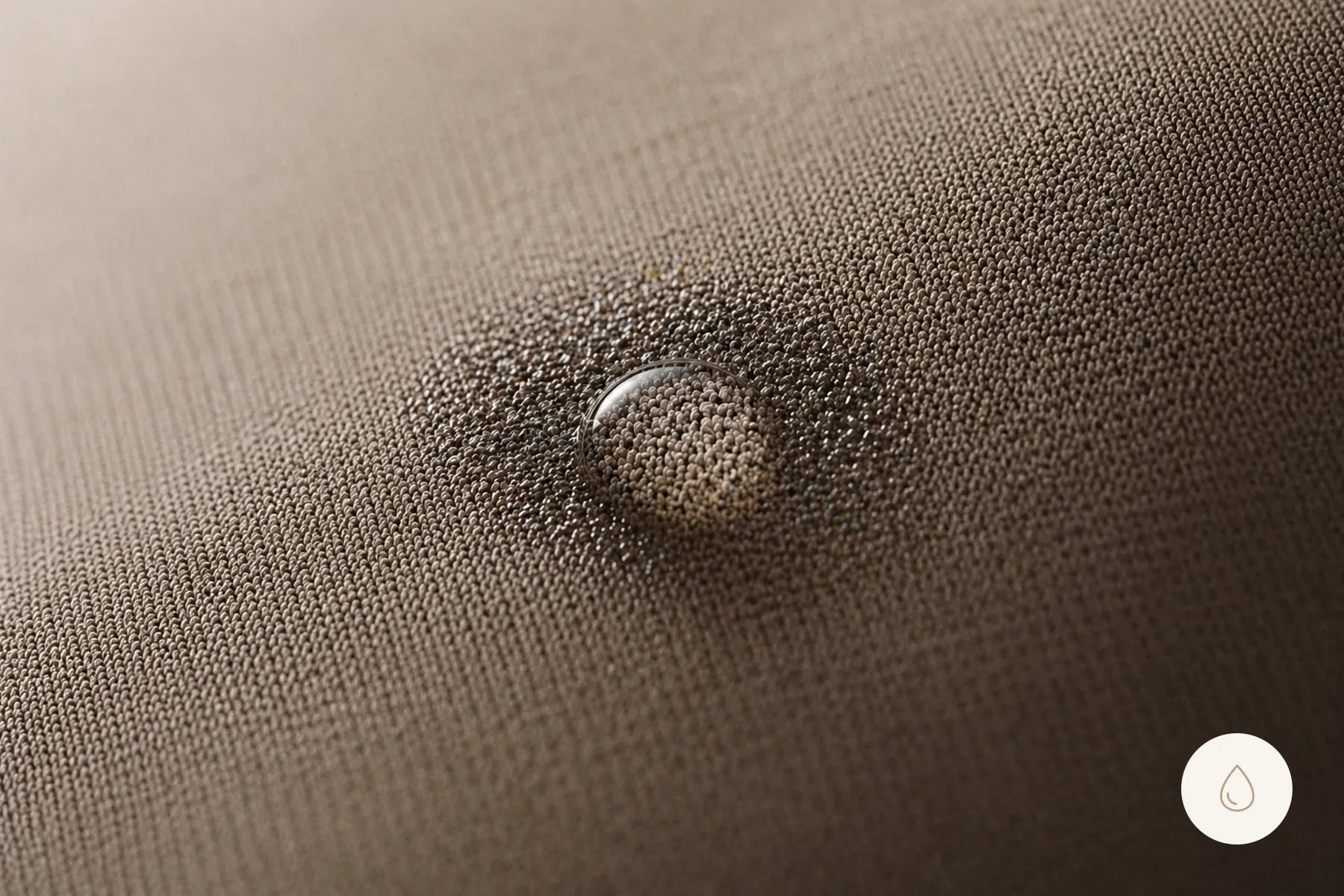
This matters more in Indian conditions than almost anywhere else. The AC office at 18°C and the street outside at 32°C are two completely different environments, and most trousers don't handle both. A breathable performance fabric — typically a moisture-wicking synthetic — pulls humidity away from the skin and allows airflow through the weave.
The marker to look for: a fabric that breathes when you sit in it for an hour. If a pair feels stuffy or starts to retain heat within 30 minutes of wear, the fabric isn't doing the work.
3. Structure that holds
This is what separates a performance trouser from a jogger. A jogger is comfortable but loses its silhouette by lunch. A performance trouser maintains its drape from morning to evening — the leg line stays clean, the waistband doesn't roll, the seat doesn't bag.
4. Wrinkle resistance
A high-performance trouser should look composed after a four-hour flight and a one-hour cab ride. This is a function of both fabric (low-wrinkle synthetic or treated natural fibre) and construction (clean inner seams, well-set waistband, even hem).
When you actually need one.
Honestly, not all the time. If your day is desk → home, a well-cut cotton chino is fine. The case for a performance trouser is when your day actually has variance in it:
- Long commutes by train, cab, or auto
- Travel days with multiple modes — airport, flight, taxi, meeting
- AC offices in monsoon, where you swing between 28°C street and 18°C office
- Back-to-back meetings where you need to look composed for ten hours
- Any context where you'd otherwise change clothes mid-day
If your day looks like that, a regular trouser is fighting you. A performance trouser stops fighting you.
"A jogger is comfortable but loses its silhouette by lunch. A performance trouser holds its shape from gate to dinner."— From the Love Pangolin Lab
How to think about fit.
A performance trouser is cut differently than a formal one. The stretch fabric forgives some sizing — but "forgives" doesn't mean "any fit works." Look for:
- Waistband that sits at your natural waist without pinching, and stays there when you sit
- Thigh room without bagginess — the fabric should follow the leg, not float around it
- A clean break at the ankle: full-length for classic, just above the shoe for a modern silhouette
- Pockets that lie flat against the leg and don't gape open when you sit
Cuts worth knowing.
Slim-tapered
The default for office wear. Narrow through the thigh, tapered to the ankle. Works under a blazer, works alone with a shirt or polo.
Straight-leg
Slightly more relaxed through the thigh, straight from knee to ankle. Better for taller frames and warmer weather.
Wide-leg
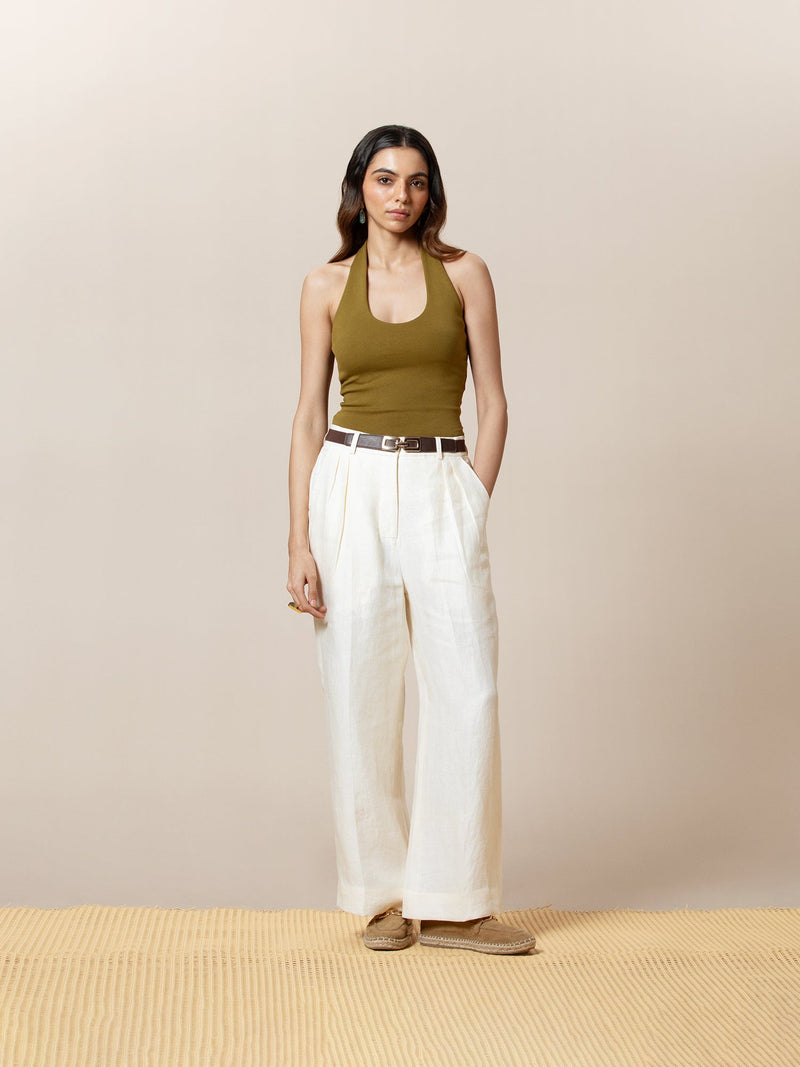
Generous through thigh and leg. Modern silhouette, very breathable. Best in summer or for long sitting days. Pairs well with a fitted top to balance proportion.
Pleated
Single or double pleat at the waistband adds room without bulk. Sits well on most body types. Slightly more formal silhouette than flat-front but reads modern when paired with relaxed shoes.
What we make.
Love Pangolin builds trousers in PerfoLite — our proprietary lightweight, breathable, structured fabric — and CloudSense, which adds heat regulation and moisture wicking for more demanding conditions. Cut for full range of motion and finished in Mumbai.
Shop the full range: Men's Trousers → · Wide-Leg → · Pleated →
Quick recap.
- Performance trouser = stretch fabric + breathability + structure + wrinkle resistance, all together
- Worth it if your day involves real variance in temperature, sitting, or travel
- Pick a cut to match the context: slim-tapered for office, wide-leg for warmth, pleated for modern-formal
- Fit matters more than fabric branding — make sure waistband, thigh, and break all sit right